🚗 Someone is tailgating you? The two-second rule can help prevent a crash
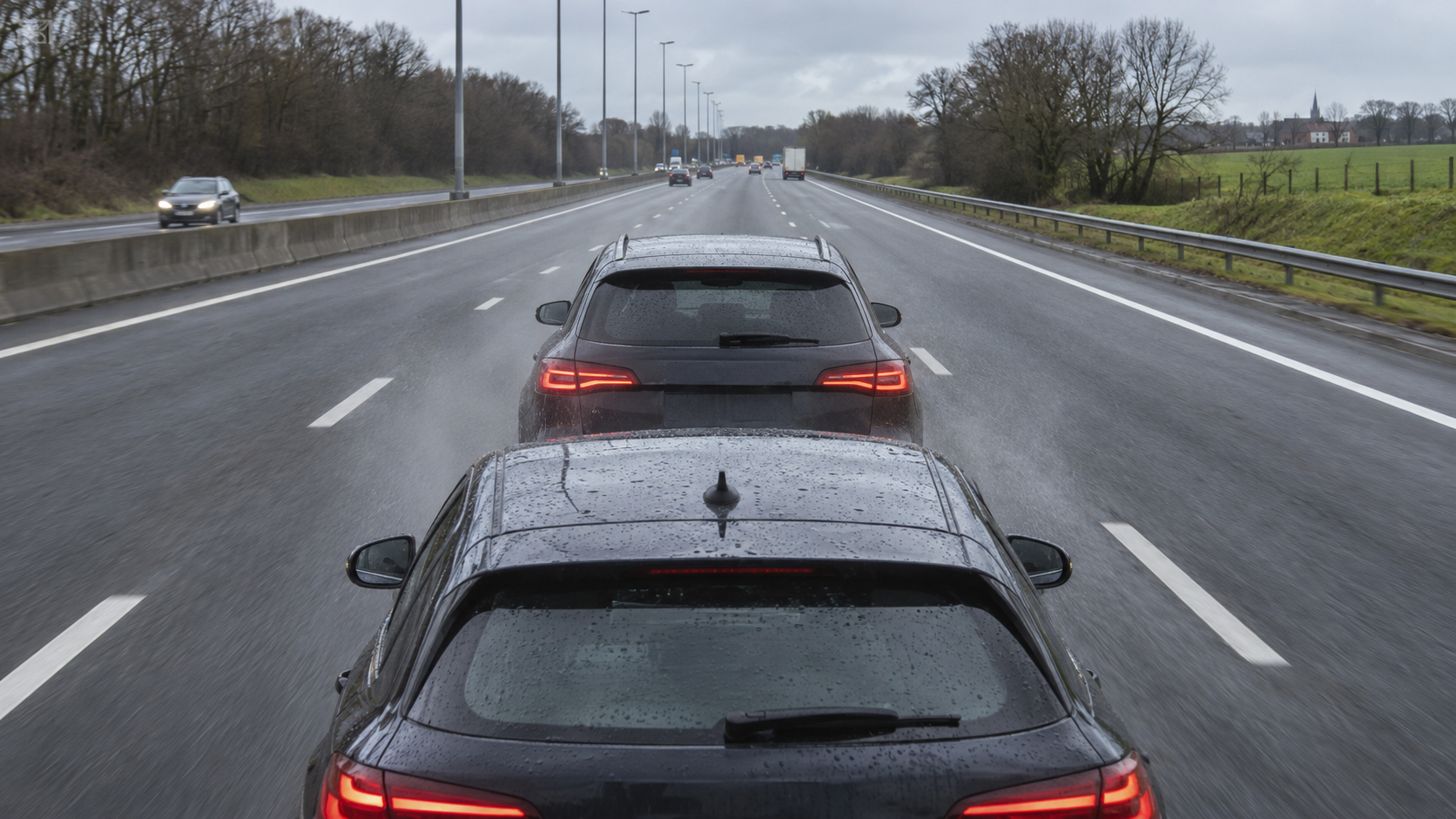
Having a vehicle drive right behind you, sometimes only a few metres away, is stressful. More importantly, it is dangerous: if you have to brake suddenly, the driver behind you may not have enough time to react.
This behaviour is commonly known as “tailgating”. The Federal Police has recently focused on it in a public awareness campaign, prompting many questions about safe following distances and the two-second rule. What does Belgian traffic law actually require?
📏 Keeping a safe distance is already compulsory
Under the current Highway Code, every driver must keep a sufficient safety distance from the vehicle in front, taking their speed into account. This obligation already exists, even though the two-second rule is not yet expressly included in the current Code.
From 1 June 2027, the new Code of the Public Road will provide a clearer benchmark: where the speed limit is over 50 km/h, drivers will have to leave a gap equal to at least two seconds of travel time.
At a speed limit of 50 km/h or below, the general duty to keep a sufficient distance will still apply. The appropriate distance depends on speed, traffic and the circumstances.
⏱️ How do you count two seconds?
Choose a fixed point, such as a road sign, a bridge or a lamppost. When the vehicle in front passes it, count calmly: “one crocodile, two crocodiles”. You should reach that same point only after those two seconds have passed.
Two seconds do not equal a fixed distance in metres: the faster you drive, the greater the distance. At 120 km/h, you travel about 67 metres in two seconds; at 100 km/h, about 56 metres.
Two seconds are a minimum in the situations covered by the new Code. On wet roads, in poor visibility or in other difficult conditions, you should leave more space. The explanatory report recommends using three seconds as a starting point in such circumstances.
⚖️ Two seconds are not an automatic stopwatch test
The Federal Police explains that the two-second rule is a safety guideline, not an automatic stopwatch test for issuing fines. Even under the current rules, police may act where driving is clearly dangerous or where the general duty to keep a sufficient distance is breached. The specific behaviour and traffic conditions matter.
It is also a misconception that liability in a rear-end collision is always decided by a simple automatic formula. The actual circumstances must be assessed, including the distance between the vehicles, speed, braking, road conditions, visibility and witness evidence.
🛑 What should you do if someone is tailgating you?
Do not brake suddenly to “teach them a lesson”: that could cause the very crash you are trying to avoid. Stay calm, gradually adjust your speed if necessary, and leave more space in front of you so you can brake smoothly. If you can change lanes safely, do so. If the other driver’s behaviour feels threatening, move to a safe place and contact the police.
A safe following distance gives the driver behind you room to react. It gives you room to react, too. Tailgating is more than irritating: it cuts down the time available to avoid a crash.
If you have questions about a collision or an offence involving a safe following distance, please contact me. I will be happy to advise you about your situation.