❄️ Liability in the event of accidents caused by snow and ice in Belgium
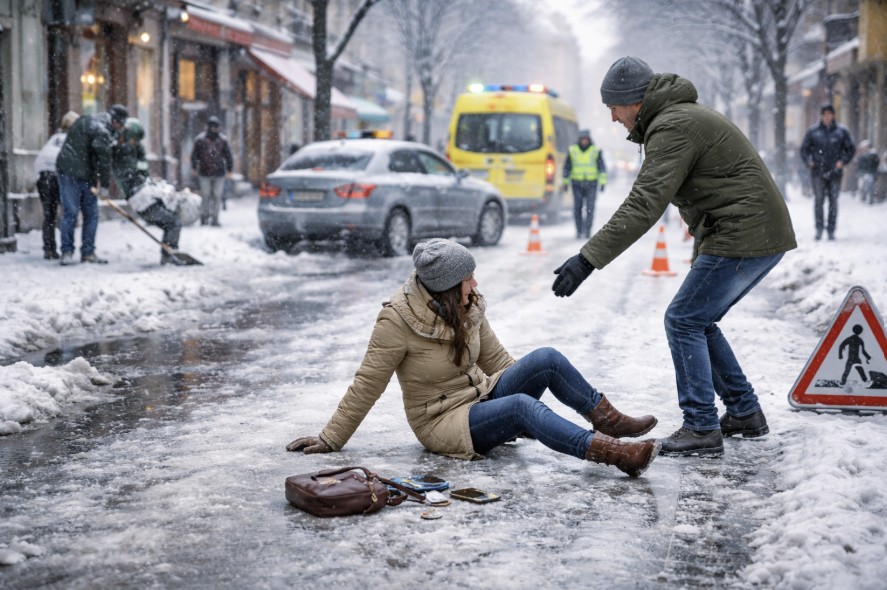
Winter often brings difficult weather conditions: snow, ice, slippery roads and hazardous pavements. Each year, these conditions lead to numerous accidents involving both pedestrians and motorists. A recurring question then arises: who is liable in the event of an accident caused by snow or ice in Belgium?
The answer depends on the specific circumstances of the accident, the status of the persons involved, and the legal obligations incumbent upon them. This article provides a clear and practical overview.
⚖️ 1. General principle: liability based on fault
Under Belgian law, civil liability is based in principle on former Article 1382 of the Civil Code, now Article 6.5 of the new Civil Code. In order to establish liability, three cumulative elements must be proven:
-
a fault (negligent or imprudent behaviour),
-
damage (bodily, material or moral),
-
a causal link between the fault and the damage.
The mere presence of snow or ice is therefore not sufficient, in itself, to automatically establish liability.
🏛️ 2. Accidents on public roads: liability of municipalities and public authorities
🧹 2.1 Duty of maintenance and safety
Municipalities and public authorities have a duty to ensure the normal maintenance of roads and pavements. This includes, in principle, taking reasonable measures in winter conditions (salting, snow removal, warning signs).
However, this is not an obligation of result, but an obligation of means.
👉 This means that a municipality is not required to guarantee the total absence of ice at all times, particularly in the event of sudden or persistent weather conditions.
⚠️ 2.2 When can a municipality be held liable?
A municipality may be held liable, in particular, if:
-
no reasonable measures were taken despite a known and lasting danger,
-
particularly hazardous areas (slopes, pedestrian crossings, bus stops) were neglected,
-
the complete absence of warning signs exposed users to an abnormal risk.
Conversely, if the municipality demonstrates that it acted diligently in light of its resources and the circumstances, liability may be excluded.
🏠🛍️ 3. Accidents in front of a private residence or a business
👣 3.1 Duty of care of residents
In Belgium, there is no general rule requiring private individuals to systematically clear snow from the pavement in front of their home. However, certain municipal regulations may impose specific obligations.
Even in the absence of a formal obligation, a resident may incur liability if it is established that they:
-
allowed a manifestly dangerous situation to persist,
-
aggravated the danger (for example by pushing snow onto the pavement or creating an ice patch).
🧾 3.2 The specific case of shopkeepers
Shopkeepers are subject to an enhanced duty of safety towards their customers. A slippery pavement or entrance in front of a business may give rise to liability if no preventive measures were taken (salting, anti-slip mats, warning notices).
🚗❄️ 4. Road traffic accidents involving snow or ice
🛑 4.1 Driver’s liability
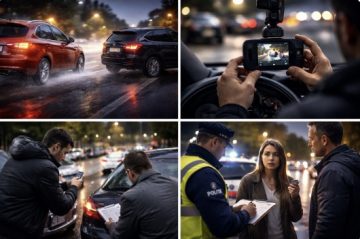
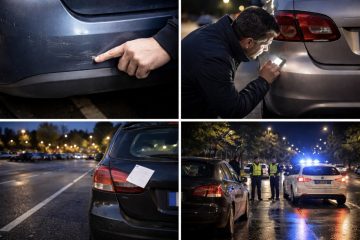
In the event of a road traffic accident, drivers must adapt their driving to weather conditions:
-
reduced speed,
-
increased safety distances,
-
cautious manoeuvres.
Snow or ice does not automatically constitute grounds for exemption from liability. Losing control of a vehicle may be considered a fault if the driving was not adapted to the circumstances.
📄 4.2 Role of insurance
Motor insurance generally intervenes to compensate victims. However:
-
serious fault may affect coverage,
-
disputes concerning the apportionment of liability are common, particularly in multiple-vehicle collisions.
🚶♀️⚠️ 5. Pedestrian liability: a duty of caution
Pedestrians also have a duty of care. Courts take into account factors such as:
-
clearly inappropriate footwear,
-
imprudent behaviour,
-
failure to use safer designated areas.
A pedestrian’s fault may result in a reduction or even exclusion of compensation in cases of shared liability.
🔍 6. In practice: a case-by-case assessment
⚖️ 6.1 Principle: Article 6.5 of the new Civil Code
Article 6.5 of the new Civil Code enshrines the general principle of fault-based liability:
“Any person is liable for the damage caused to another by his or her fault.”
In accidents involving snow or ice, this principle remains central: the existence of a fault must be demonstrated in light of the specific circumstances.
❄️ 6.2 Force majeure (Article 6.7 of the new Civil Code)
Article 6.7 of the Civil Code provides for an exclusion of liability where it was impossible to comply with the applicable rule of conduct.
The person concerned is then not liable under Article 6.5, unless the impossibility results from their own fault.
In assessing force majeure, particular account is taken of whether the event was:
-
unpredictable (for example, a sudden and exceptional weather phenomenon),
-
or unavoidable, even with normal diligence.
👉 In practice, Belgian courts apply this concept strictly: a typical, announced or recurrent winter episode does not, in principle, constitute force majeure.
🔎 6.3 A concrete assessment by the courts
Whether assessing fault or force majeure, courts always carry out a concrete, fact-specific analysis, taking into account:
-
the intensity and predictability of the weather conditions,
-
the reasonable reaction time,
-
the conduct of the person concerned,
-
any contributory fault of the victim.
No automatic conclusion can be drawn from the mere presence of snow or ice.
✅ Conclusion
Snow and ice do not exempt individuals or authorities from liability, but they do influence the assessment of fault and legal duties. Public authorities, residents, shopkeepers, drivers and pedestrians must all act with prudence and diligence.
👉 In the event of doubt or a dispute, it is strongly recommended to consult me in my capacity as a lawyer specialised in road traffic law, in order to assess the prospects of success and the appropriate steps to be taken.