🚗 European driving licence: what will change in practice by 2030?
The European Parliament has recently approved a major reform of the driving licence system. Beyond technical modernisation, these measures will have very concrete consequences for Belgian drivers, affecting the format of the licence, road traffic sanctions, the training of young drivers and the cross-border enforcement of penalties.
📱 1. A digital driving licence on your smartphone
A major step forward
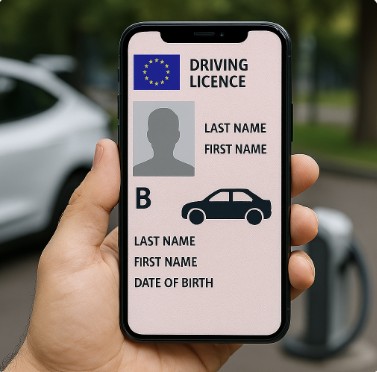
By 2030, all EU citizens will be able to use a fully digital driving licence, accessible via a smartphone or another secure digital device.
This licence will be integrated into the future European Digital Identity Wallet.
🪪 The physical licence remains available
-
the traditional physical licence will remain available upon request;
-
the digital licence will have the same legal value during roadside checks.
👉 Drivers will be free to choose the format that suits them best.
⏳ 2. Harmonised validity, without age-based discrimination
📅 Validity period
-
🚘 Cars and motorcycles: 15-year validity (10 years if used as an identity document);
-
🚛 Trucks and buses: renewal every 5 years.
🩺 Fitness to drive
The EU has not imposed an automatic shortening of licence validity for older drivers.
However:
-
📝 a mandatory self-assessment of fitness to drive will be required upon issuance or renewal;
-
🇧🇪 Member States, including Belgium, remain free to require medical examinations.
⚡ 3. Category B licence and heavier electric vehicles
Good news for electric vehicle drivers:
-
🔋 a category B licence will allow driving vehicles up to 4.25 tonnes (instead of 3.5 tonnes);
-
🌱 this applies to vehicles with alternative propulsion systems (electric, hydrogen).
⚠️ This extension does not apply to conventional combustion-engine vehicles.
🧑🎓 4. Young drivers: earlier access, stricter rules
🚦 Driving from the age of 17
Member States may allow:
-
driving from 17 years old, under supervised conditions;
-
possible extension to certain truck categories, subject to strict national rules.
⏱️ Mandatory probation period
A minimum two-year probation period will apply across the European Union.
During this period:
-
🍷 stricter zero-tolerance rules for alcohol and drugs;
-
🚨 harsher penalties for speeding and dangerous driving.
➡️ Belgium already applies similar rules, which are now reinforced at EU level.
🌍 5. Road traffic sanctions: no more cross-border impunity
⚖️ Mutual recognition of sanctions
From now on:
-
any licence suspension, withdrawal or restriction imposed abroad must be communicated to the issuing Member State;
-
the sanction may have EU-wide effect.
🚔 Serious offences only
This applies solely to serious traffic offences, including:
-
🍺 driving under the influence of alcohol or drugs;
-
🚀 serious speeding offences;
-
⚠️ offences causing death or serious injury;
-
🏃♂️ hit-and-run offences.
👉 Crossing a border will no longer shield drivers from serious penalties.
🗓️ 6. When will this apply in Belgium?
-
📜 These measures are adopted through EU directives;
-
🇧🇪 Belgium must transpose them into national law;
-
⏳ transposition deadline: 2027;
-
📲 full implementation of the digital licence is expected by 2030.
✅ Conclusion
This reform aims to ensure:
-
🔒 more effective road traffic enforcement;
-
🌐 increased European harmonisation;
-
🚘 adaptation to electric mobility and digital tools.
For Belgian drivers, this means greater cross-border vigilance, stricter rules for young drivers and a long-awaited modernisation of the driving licence.
Every road traffic law case is unique.
For any question or difficulty relating to your driving licence, I provide rigorous and pragmatic legal assistance.