Hit and run: situations where drivers don’t realize they are committing an offence
A hit and run is often associated with deliberately fleeing responsibility.
In practice, many drivers are prosecuted without intending to escape. Everyday situations can unexpectedly create legal risks.
Here are the most common scenarios — and the right reflexes.
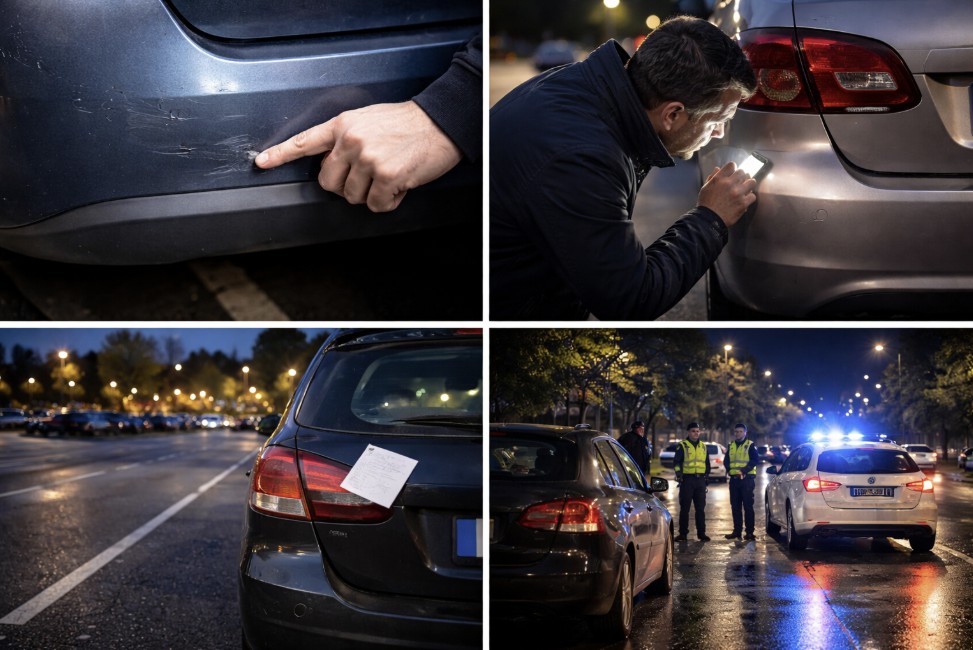
🅿️ 1) Minor parking damage
Typical situation:
-
you slightly hit another vehicle while manoeuvring,
-
the damage seems minimal,
-
you leave without providing your details.
⚠️ Legal risk
Even minor damage requires you to make your identification possible. Leaving without doing so may qualify as a hit and run.
✅ What to do
-
leave your full contact details,
-
take photos of the damage and the note,
-
preferably inform the police.
🔇 2) A collision you did not notice
This may happen when:
-
the impact is very light,
-
there is barely any noise or vibration,
-
contact occurs at very low speed.
⚖️ Key question before the court:
Were you aware of the accident?
Judges assess:
-
the intensity of the impact,
-
the extent of the damage,
-
the circumstances,
-
your behaviour afterwards.
Lack of awareness may exclude intent — but it must be credible.
📄 3) Leaving after incomplete information exchange
Examples:
-
verbal exchange only,
-
taking a photo of the licence plate only,
-
leaving quickly to “let the insurance handle it”.
⚠️ If proper identification is not possible afterwards, this may be considered a hit and run.
✅ What to do
-
complete a European accident statement,
-
exchange full identity and insurance details.
📝 4) Leaving a note: is it enough?
A note under the windshield is not always sufficient.
Common issues:
-
the note disappears,
-
incomplete information,
-
illegible writing.
✅ Best practice
-
include full name and phone number,
-
photograph the note on the vehicle,
-
inform the police promptly,
-
notify your insurer.
⚖️ 5) What is legally considered a hit and run?
Under Belgian law, a hit and run occurs when a driver:
-
is involved in an accident,
-
leaves the scene with the intention of avoiding necessary findings, particularly identification.
👉 Intent is a key element.
🔍 6) How courts assess intent
Courts examine:
-
your immediate behaviour,
-
spontaneous steps taken,
-
how quickly you reported the incident,
-
the consistency of your explanations.
⏱️ Acting quickly and transparently can make a significant difference.
💸 7) Possible penalties
Depending on the circumstances:
-
criminal fine (plus surcharges),
-
driving ban or licence withdrawal,
-
medical or psychological assessments,
-
significant civil liability,
-
much heavier penalties if injuries are involved.
🚨 8) What to do if you are unsure
If you think you may have been involved in an incident:
-
Return to the scene if possible
-
Or report immediately to the police
-
Inform your insurer
-
Keep all evidence (photos, witnesses)
✔️ Key takeaway
Many hit and run cases result from panic, haste or misjudgment.
After any incident, even minor:
➡️ Stop – identify yourself – document – report.
📞 Need legal advice?
Have you been contacted by the police or summoned to court for a hit and run?
Did you leave the scene and are unsure about the risks?
👉 Contact me promptly to assess your situation and determine the best defence strategy.
Early legal assistance can make a decisive difference.