Driving without a licence in Belgium: towards automatic confiscation of the vehicle?
The fight against road insecurity is entering a new phase.
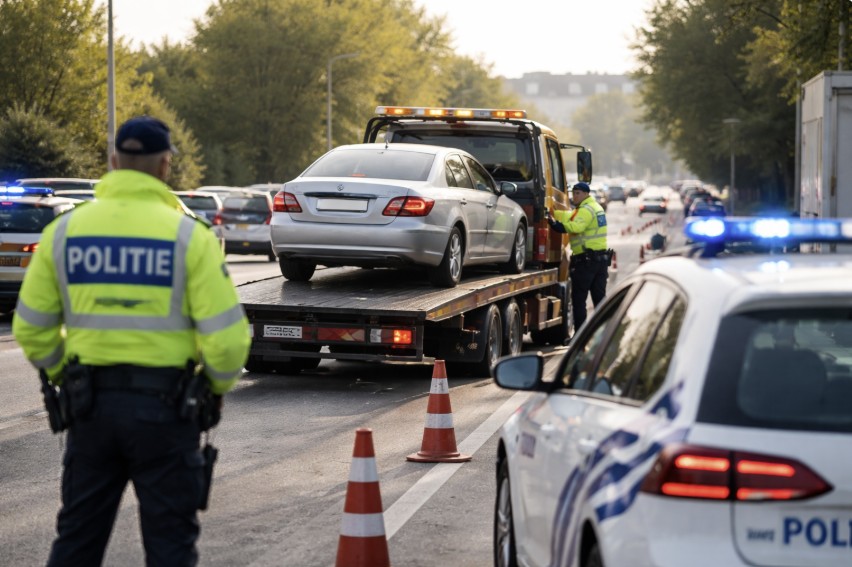
A bill recently debated in the Belgian Parliament provides for a particularly deterrent measure: the confiscation of the vehicle used by anyone driving without a valid driving licence.
This reform represents a significant shift in Belgian road traffic law and deserves to be clearly explained, both for drivers and for vehicle owners.
1. Why this reform?
📊 A widespread and recurring phenomenon
According to figures discussed during parliamentary debates, around 90 drivers per day are intercepted in Belgium while driving:
-
without ever having obtained a driving licence,
-
despite a driving ban,
-
or following an administrative or judicial withdrawal of their licence.
Despite existing fines and bans, recidivism remains high, posing a serious road safety concern.
👉 The legislator’s objective is clear: to strike harder, where the sanction is truly felt.
2. What does the bill actually provide?
⚖️ Confiscation becomes the rule
Until now, vehicle confiscation was optional:
the police court judge could order it, but was not obliged to do so.
The bill reverses this logic:
-
🔹 Vehicle confiscation becomes the principle
-
🔹 The judge must order confiscation when a person drives without a valid licence
-
🔹 Any decision not to confiscate must be explicitly justified
In other words:
👉 non-confiscation becomes the exception, not the rule.
3. Does the judge still have discretion?
Yes — but strictly framed.
The police court judge may still refrain from ordering confiscation in exceptional circumstances, such as:
-
exceptional factual situations,
-
proven emergency situations,
-
a manifestly disproportionate impact of the measure.
⚠️ Important: such a decision must be expressly reasoned in the judgment.
4. What if the driver is not the vehicle’s owner?
This is one of the most sensitive aspects of the reform.
🚗 Vehicles owned by third parties
Where the vehicle:
-
belongs to a family member,
-
is borrowed,
-
is leased,
-
or is registered in the name of a company,
confiscation raises significant legal issues, including:
-
the rights of a good-faith owner,
-
proportionality of the sanction,
-
indirect liability.
👉 In practice, these cases are likely to generate substantial litigation and evolving case law.
5. Is the measure truly deterrent?
✔️ From a factual perspective
The reform is based on a documented observation:
traditional sanctions are no longer sufficient to curb persistent offending behaviour.
Confiscation:
-
directly affects property rights,
-
prevents immediate reoffending,
-
has a strong deterrent effect.
⚠️ From a legal perspective
Debate remains regarding:
-
the automatic nature of the measure,
-
uniform application,
-
the treatment of vehicles owned by third parties.
These questions will be clarified through judicial practice.
6. Key takeaways
🔴 Driving without a licence in Belgium will be sanctioned more severely
🔴 Vehicle confiscation becomes the rule
🔴 Any exception must be expressly justified by the judge
🔴 Vehicle owners must be particularly vigilant
Conclusion
This reform reflects a clear trend towards stricter road traffic enforcement, aimed at tackling the most dangerous behaviours.
For drivers and vehicle owners alike, the message is unambiguous:
👉 driving without a licence is no longer just an offence — it is now a major financial risk.
📞 Need legal advice or defence?
Every situation is different, and the consequences of vehicle confiscation can be severe.
If you are facing proceedings under Belgian road traffic law or if your vehicle has been seized, feel free to contact me to analyse your case and determine the most appropriate defence strategy.